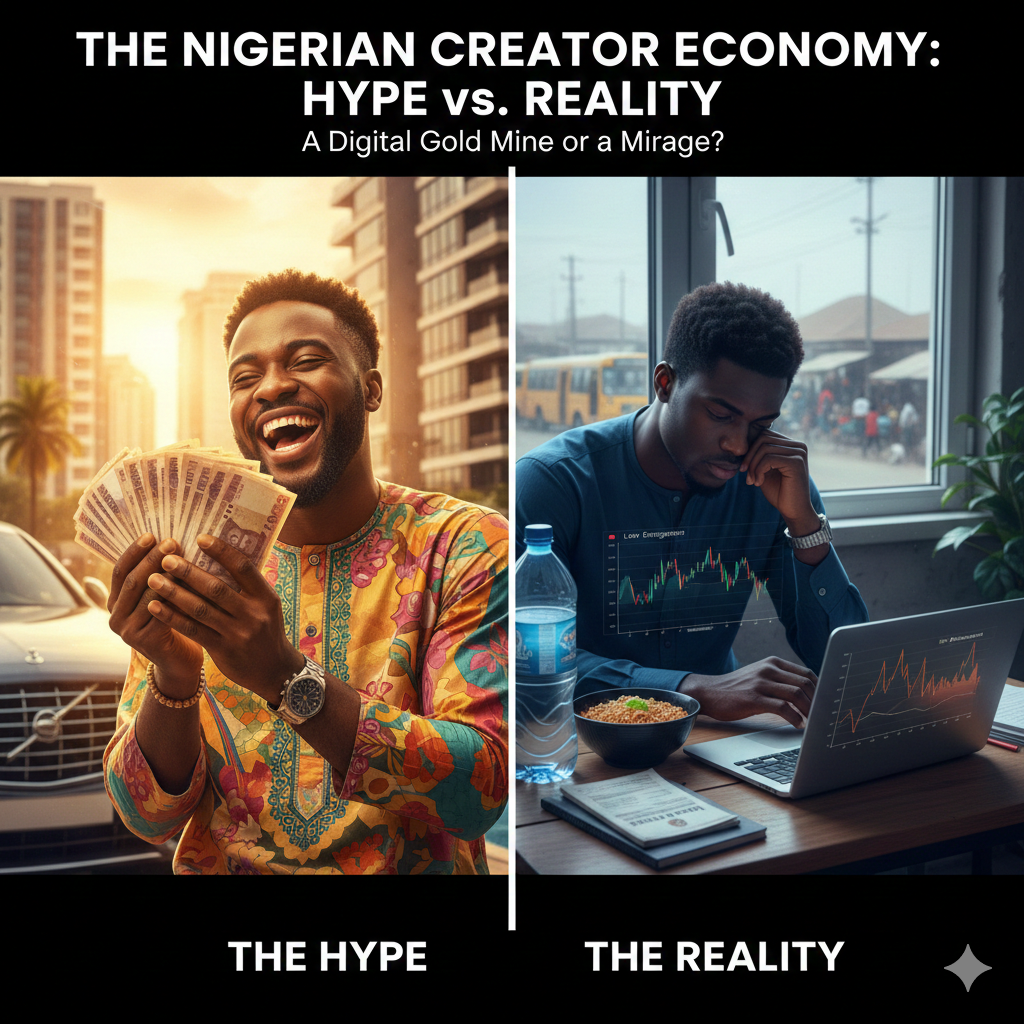
The “New Nigerian Dream” has undergone a radical makeover. A decade ago, the pinnacle of success was a corner office in a Marina bank or a “Japa” ticket to Houston. Today, for many, the dream is a ring light, a smartphone, and a digital product link in a social media bio.
If you spend ten minutes on Instagram, you’ll see it: a skit maker showing off a new house in Lekki. On TikTok, a 20-year-old explains how they made $2,000 from a “faceless” YouTube channel. The narrative is loud and clear: The creator economy in Nigeria is booming. But as the naira fluctuates and the algorithms get stingier with reach, a haunting question remains for the thousands of Nigerians hitting “upload” today: Is this a sustainable career, or are we all just chasing a digital mirage?
According to Punch Newspapers, Nigerian creators now churn out up to 15,000 pieces of original content every day, reaching a global audience of over 3 billion people. The volume is real; the only question is who actually owns the value.
The Reality Behind the “Viral Payout”
In Nigeria, social media is a land of extremes. We see the glitz, the luxury SUVs and the “soft life” vacations. What the “Gram” doesn’t show you is the Digital Poverty Trap.
While the global creator economy is valued at over $250 billion, the Nigerian creator faces a unique set of “boss music” levels that creators in the West simply don’t have to deal with:
- The CPM Tax: A YouTuber in Ohio might earn $15 per 1,000 views. A YouTuber in Ibadan, targeting a local audience, might earn just $1.50 for the same amount of work because advertisers pay less for the Nigerian market.
- The Payment Gate: Getting paid in foreign currency is often a hurdle. Between fluctuating exchange rates and platforms that make withdrawing your hard-earned dollars a nightmare, your $500 payout might buy a MacBook today and barely cover a battery next month.
- The Infrastructure Burden: In a country where data costs are high and “NEPA” is unpredictable, the physical and financial cost of staying relevant is double the global average.
The Three Tiers of the Nigerian Digital Space
To understand if the money is real, we have to look at who is actually holding the bag. In our ecosystem, creators generally fall into three buckets:
1. The Hopeful Hobbyist
This is about 90% of the market. They post because they want to be “seen.” They focus on vanity metrics likes, comments and shares. Because they don’t have a monetisation strategy beyond “hoping for a brand deal,” they are at the mercy of the algorithm. When the views drop, the “business” dies.
2. The Viral Sprinter
These are the creators who caught lightning in a bottle. A dance challenge, a funny soundbite, or a controversial take puts them on the map overnight. They get brand deals for three months, but because they didn’t build a business system, they fade away as soon as the next trend arrives.
3. The Strategic Architect
These creators don’t just “post content”; they build ecosystems. They know that an Instagram follower is a “rented” audience. They move that audience to email lists, private communities, and structured hosting platforms. This is where the real, quiet wealth in Nigeria’s creator economy is hidden.
Moving From “Influence” to “Ownership”
The biggest mistake many Nigerian creators make is relying solely on platform payouts, such as AdSense or TikTok earnings. In a low-CPM region like ours, that’s just “pure water money.” The real moguls have shifted their mindset from Influence (being famous) to Ownership (owning the store).
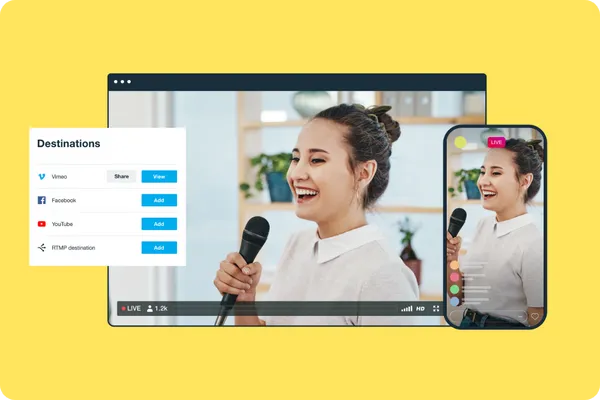
Instead of waiting for a brand to pay them to post a flyer, strategic creators are launching their own assets. By using all-in-one platforms like Vonza, they manage their own courses, memberships, and coaching programs.
Why Ownership is the Ultimate Flex:
- You Own the Data: You have your students’ email addresses and phone numbers. If Instagram disappears tomorrow, your business doesn’t.
- You Control the Price: You decide what your knowledge is worth, rather than letting a brand dictate your value based on your “likes.”
- Sustainability: You don’t have to go viral every week to pay your bills. When you own the platform, you own the relationship with your customers.
The Success Formula ($SF$)
If we were to put the sustainable creator economy into a simple formula, it would look like this:
$$Strategy + Ownership + Distribution = Sustainable Wealth$$
If you are just “vibing” on camera, you are a hobbyist. If you are solving a specific problem for a specific audience and charging for that solution through a structured system, you are an entrepreneur.
The Emotional Reality of the Grind
We have to be honest: the creator economy is not an “easy out.” It requires a level of mental fortitude rarely discussed. There is the pressure to “look successful” to maintain your brand image even when the bank account is low, and the inevitable burnout that comes from the relentless 24/7 content cycle.
The most successful creators in Nigeria aren’t necessarily the ones with the most followers; they are the ones with the most peace of mind. They achieved this by diversifying their income so they don’t have to “dance for bread” every single day.
Final Verdict: Hype or Reality?
So, is the creator economy in Nigeria a hype?
Partially. The social media glamour creates an illusion of instant wealth that baits many people into a cycle of frustration.
Is it real? Absolutely. Many Nigerians are building 7-figure and 8-figure businesses from their bedrooms. However, this reality is strictly reserved for those who treat it like a business, not a popularity contest.
Attention brings visibility, but ownership builds wealth. The hype will eventually fade, but the systems you build will last.